
God & The Great Filter
Where are all the other lifeforms? Did they go extinct? If so, what--or Who--did they miss?

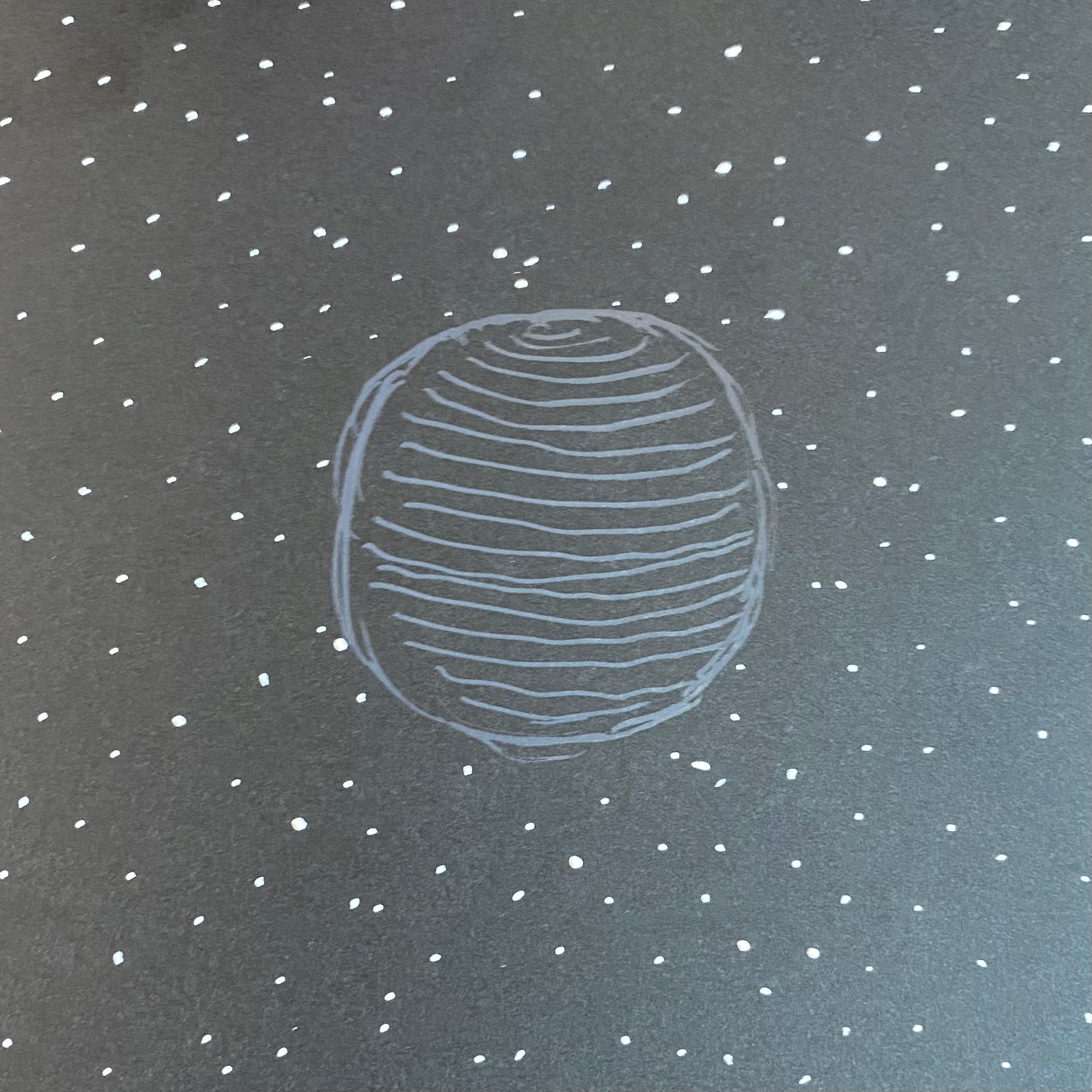
“But where is everybody?” —Enrico Fermi, Physicist
Part I—The Great Filter
If the universe is so big and so old, where are all the other lifeforms? Did they go extinct? If so, what from? What—or Who—did they miss?
These questions are what has come to be known as the Fermi Paradox, the great riddle posed by the physicist Enrico Fermi in the 20th century. The paradox is that, given the age of the cosmos and the overwhelmingly large number of planets, we should be able to see the presence of at least one other species written across the stars by now. But we do not, currently. This has many strange implications the further one thinks about it, and nearly all potential explanations of the paradox do not offer much optimism for the future of life here on Earth.
Proposed solutions to the paradox range from the seemingly obvious to the bizarre. The most straightforward of these is the idea that maybe life and intelligent organisms are simply very rare—and intelligent beings with rockets (or interstellar physics) are even rarer. The Firstborn Theory suggests we here on Earth might be the first lifeforms to have arisen in the cosmos. Somebody had to be number one! Other solutions are much wilder. The Zoo Hypothesis, for instance, wonders if life elsewhere exists, but it intentionally avoids us to let us develop on our own uninterrupted. The unsettling Dark Forest Hypothesis proposes that the universe is silent now because other civilizations are hiding—perhaps from bigger and fiercer civilizations, or even Something Else. All the planets that made a lot of noise in the past… simply may have not lasted long.
These theories are endlessly fascinating to think about. In this essay, however, I would like to focus on one solution in particular to the Fermi Paradox, namely The Great Filter Hypothesis. Its general idea is that there are many obstacles lifeforms must overcome to become an interstellar species, though there may be one hurdle in particular—a great filter—which is much harder than all the others to pass.
It is quite possible that we on Earth have already long since passed our great filter. Perhaps it was simply that life itself is incredibly rare; but once the jump from non-life to life is made, then the rest is easy! The more troubling thing to consider is that maybe everything that has come before us has potentially been the easy part, and we have yet to face—or perhaps are very close to facing—our great filter.
In this scenario, we here on Earth have already made it past many little filters, such as going from non-life to life, from single-celled to multicellular life, from signal-using to symbol-using life, and so on. This implies that we may soon be up against late filters—obstacles that multicellular intelligent lifeforms with advanced technology get to face. The ever-looming threat of nuclear extinction comes to mind, but there are also very mundane possible filters too, such as being unable or unwilling to travel beyond one’s home planet.
So! This is where we currently seem to be! Stumbling through the darkness of time, not knowing if we’ve passed the great filter or if it’s right around the corner, equipped with technological powers far outstripping our wisdom, with bills to pay, fending off diseases and injuries, distracted by endless entertainment online, searching for meaning, and all-in-all just trying to get by through life with family and friends, occasionally even enjoying a nice pint together on a warm summer evening.
So then, what—oh what—shall we do? How shall we proceed? Where do we even begin?
Part II—The Great Dilemma
One thought that immediately comes to mind is Douglas Adams’ famous injunction from The Hitchhiker’s Guide to the Galaxy: “DON’T PANIC”.
The absolute worst that can happen is that the great filter is truly just around the corner, and we don’t pass it. In that case, you, everyone you know and love, and maybe even all life on Earth (and perhaps in the entire universe) will go extinct forever. That’s it!
Jesus says “He who wishes to save his life will lose it”, so perhaps it is only by actually being willing to go gently into that good night of species extinction that will we be capable and worthy of passing our great filter. If we panic and grasp onto life, white-knuckling our way to survival, we will likely do something rash—like launching all of our nukes at once or releasing a bio-engineered virus into society. Even if we avoid these and make it to space, we will simply export our restlessness from Earth to the rest of the cosmos. As observed in the great novella Ad Limina, we will fill “the emptiness with our emptiness”. If we flee from death, we may remain alive, yes, but we will not be really living. We will end up ensnared in what novelist and philosopher Walker Percy refers to as a sort of death-in-life!
Knowing what not to do, then, we are now able to consider positive actions that might get us through a great filter. I believe a hopeful path is suggested in The Sayings of the Desert Fathers, a collection of sayings from early desert-dwelling Christian monks. In the book, there is a short story that points to a potential pathway. In the tale, one monk asks another, named St. Antoni, to pray for him. To this, St. Antoni replies, “Neither I nor God will have mercy on you unless you do something about it yourself and ask for God’s Help.”
Funnily enough, an example of this in modern times comes from none other than Elon Musk himself. He and his SpaceX team worked long hours for many years to build their Crew Dragon spacecraft. After the vehicle safely launched and carried astronauts from Earth to the space station, Musk remarked: “I’m not very religious, but I prayed for this one”.
It strikes me as at least worth observing—one can of course do whatever one wishes with the observation!—that Musk did all he could, asked for Help, and was successful. Perhaps he should try that more frequently? Perhaps we should all try that more frequently? Perhaps there used to be other lifeforms elsewhere in the cosmos, but they never asked for Help? If this sounds too woo, I pose to the reader a question: have you tried? Have you desperately needed to find a way forward in some area of life, done what you could, and asked for Help? And if Help came, did you accept it? It strikes me as a rather great wager to make and is perhaps something that can make a real difference in our efforts to get to space (amongst many other things, like growing in virtue). If no Help comes, there is no extra downside; if Help comes, all the better!
Part III—The Great Synthesis
It is possible in fact that there is no such thing as a great filter. Maybe very soon, thanks to new and improved telescopes, we will discover alien civilizations all over the universe. At the very least, maybe we will find microbial life. But even if aliens are abundant in the cosmos, it is likely that there are many more species which never quite “made it”.
It is currently estimated that over 99% of all species that ever lived on Earth are already extinct! Even if there are no great filters on other worlds, there certainly seems to be at least one here. In reality, this is probably the case throughout the rest of the universe, too. Even if some organisms have thrived, nearly all other creatures have likely been… filtered out.
It may be the case that other lifeforms did not pass the great filter because they never built starships. It may also be the case that they did not pass the great filter because they never asked for Help. It may even be closest to the truth to say that they did not pass the great filter because they never did both.
St. Isidore of Seville, a 7th century Spanish bishop often referred to as the Schoolmaster of the Middle Ages, once wrote: “It is beneficial to know many things and live correctly. But if we are not capable of doing both, it is better to follow the pursuit of living well than that of knowing many things.”8 We might similarly say today: It is good to be a saint. It is also good, indeed very good, to build starships. We should try to do both, and I think we can. If we are unable to do both, however, it is better to be a saint than to build a starship.
But we should really try to do both!
Asking for Help (and accepting Help if it comes!) may be the key to doing so.